


Phimosis means the foreskin is too tight to retract comfortably over the head of the penis. Some men notice it only during sex, masturbation, cleaning, or condom use. Others may have pain, cracks, recurrent infections, ballooning during urination, or difficulty maintaining hygiene.
A very common question is: “I have phimosis and I don’t want surgery. What are my options?”
The good news is that not every case of phimosis needs full circumcision. Depending on the severity, age, scarring, infection history, and personal preference, treatment options may include foreskin preservation, gentle stretching, steroid creams, phimosis stretching devices such as PhimoCure, balloon dilation devices such as NovoGlan, and foreskin-sparing surgery.
However, not all phimosis is the same. Mild tightness may improve with stretching and topical steroid therapy, while severe scarring, recurrent balanitis, lichen sclerosus/BXO, painful cracks, or long-standing adult phimosis may require surgery. In patients who want to preserve as much foreskin as possible but still want a reliable long-term solution, partial circumcision can be a very practical middle option.
Medical disclaimer: This article is for educational purposes only. Phimosis treatment should be planned after examination by a qualified urologist or andrologist. Do not forcefully pull the foreskin, use steroid creams without prescription, or use stretching devices aggressively. If the foreskin is stuck behind the glans and cannot come forward, that is paraphimosis, a medical emergency.
TABLE OF CONTENTS
What Is Phimosis?
Phimosis is a condition in which the foreskin cannot be fully retracted over the glans, meaning the head of the penis. In children, a non-retractile foreskin can be normal and may improve naturally with age. In adults, however, phimosis is more likely to be related to tight skin, repeated inflammation, infection, scarring, diabetes, poor hygiene, or a skin condition such as lichen sclerosus.
The European Association of Urology notes that foreskin non-retractability in children may be physiological, but pathological phimosis must be distinguished from normal developmental adhesions. It also states that paraphimosis, where the foreskin gets stuck behind the glans, is a medical emergency.
In adults, phimosis can interfere with hygiene, sex, urination, and confidence. Some men avoid treatment because they fear circumcision, but modern management is more flexible than “full circumcision or nothing.
Symptoms of Phimosis
You may have phimosis if you experience:
- Tight foreskin that does not retract fully
- Pain while pulling the foreskin back
- Pain during sex or masturbation
- Small cuts or cracks on the foreskin
- Recurrent redness, swelling, or infection
- Bad smell or smegma buildup
- Ballooning of foreskin during urination
- Difficulty cleaning under the foreskin
- Foreskin getting stuck behind the glans
- Anxiety or fear during sexual activity
If the foreskin has white patches, thick scarring, repeated tearing, or painful narrowing, a urologist should rule out lichen sclerosus, also known as BXO. In scarred phimosis or BXO, steroid creams may help temporarily, but surgery is often more reliable. BAUS notes that circumcision is the mainstay of treatment when the foreskin is scarred by balanitis xerotica obliterans.
I Have Phimosis and Don’t Want Surgery: Is It Possible?
Yes, in many cases it is possible to try non-surgical treatment first. The most common non-surgical options are:
- Gentle foreskin stretching
- Topical steroid cream
- Hygiene correction
- Treatment of infection or balanitis
- Phimosis stretching rings or devices
- Balloon dilation devices such as NovoGlan
- Foreskin preservation protocols
Topical corticosteroids are widely used as first-line treatment for symptomatic phimosis, especially when the skin is not severely scarred. A guideline summary from the European Association of Urology recommends topical corticosteroids as first-line treatment in symptomatic phimosis, while circumcision is recommended for BXO or phimosis that does not respond to treatment.
So the real question is not simply “Can phimosis be treated without surgery?” The better question is: What type and grade of phimosis do you have?
Main Treatment Options for Phimosis Without Full Circumcision
Many men with phimosis worry that full circumcision is the only solution, but that is not always true. In mild to moderate cases, the foreskin can often be preserved with conservative treatments such as gentle stretching, steroid creams, hygiene improvement, infection control, and medical stretching devices. The right option depends on the tightness of the foreskin, presence of scarring, pain, infections, and how much foreskin the patient wants to preserve. Below are the main treatment options for phimosis without full circumcision.
Foreskin Preservation: The Modern Patient-Centered Approach
Foreskin preservation means treating phimosis while keeping as much normal foreskin as possible. This is important for men who want to maintain their natural anatomy, sensitivity, appearance, or cultural identity.
Foreskin-preserving options include:
- Stretching exercises
- Steroid cream with stretching
- Phimosis stretching rings
- Balloon dilation devices
- Preputioplasty
- Limited dorsal slit in selected cases
- Partial circumcision
A recent review on prepuce-preserving management of phimosis describes several options, including topical corticosteroids, mechanical dilation devices such as NovoGlan and Phimostop, and foreskin-preserving surgical techniques. It emphasizes a patient-centered approach rather than assuming full circumcision is the only solution.
Foreskin preservation works best when the phimosis is mild to moderate, the skin is elastic, and there is no severe scarring or active infection.
2. Gentle Foreskin Stretching
Foreskin stretching is one of the simplest conservative treatments for phimosis. The idea is to apply gentle, regular tension to the tight ring of foreskin so that the skin gradually becomes more elastic.
Stretching may help in:
- Mild phimosis
- Moderate phimosis
- Tight foreskin without severe scarring
- Painful retraction due to tight ring
- Men who want to avoid or delay surgery
Stretching should be gentle. It should not cause bleeding, cuts, severe pain, or swelling. Aggressive stretching can worsen phimosis by causing micro-tears and scar formation.
A practical approach is:
- Use warm water or bath to relax the skin
- Gently retract only up to the point of mild tension
- Hold for a short time without pain
- Repeat daily
- Combine with prescribed steroid cream if advised
- Stop if there is cracking, bleeding, infection, or severe pain
Stretching works slowly. It may take weeks to months. It is not ideal for severe pinhole phimosis, thick scarring, repeated infection, or suspected BXO.
3. Steroid Cream for Phimosis
Topical steroid creams are among the most common medical treatments for phimosis. Steroids help by reducing inflammation and softening the tight foreskin ring, making stretching more effective.
Commonly used prescription steroid options may include:
- Betamethasone
- Clobetasol
- Mometasone
- Hydrocortisone in milder cases
- Triamcinolone
Medscape summarizes that corticosteroid creams such as 0.05% betamethasone, hydrocortisone, or triamcinolone have been used medically for phimosis, often once or twice daily for four to eight weeks, with higher success reported when combined with stretching.
The Cochrane review on topical corticosteroids for phimosis reports that non-invasive corticosteroid treatment for four to eight weeks has shown favorable outcomes, especially in children.
How Steroid Cream is Usually Used
A doctor may advise applying a small amount of steroid cream to the tight ring of the foreskin, usually once or twice daily, for a limited period such as four to eight weeks. It is often combined with gentle stretching.
Important precautions
Do not use steroid cream without medical advice. Overuse can cause:
- Skin thinning
- Irritation
- Redness
- Burning
- Fungal infection
- Recurrence after stopping
- Worsening if the diagnosis is wrong
BAUS notes that steroid creams may soften the foreskin if scarring is mild, but the condition may return after stopping the cream.
PhymoCare for Phimosis
PhymoCare is generally discussed as a foreskin stretching or phimosis care approach/device category, depending on the product available in a patient’s region. The basic principle is gradual stretching of the tight foreskin ring using controlled, gentle dilation.
Products in this category aim to help men who want a non-surgical option and are uncomfortable with finger stretching. They may use rings, dilators, or structured stretching tools to apply controlled tension.
PhymoCare-type stretching may be useful for:
- Mild to moderate phimosis
- Men who want foreskin preservation
- Men who cannot stretch comfortably with fingers
- Men who want a structured daily routine
- Patients trying to avoid full circumcision
However, any device should be used carefully. It should not cause pain, cuts, swelling, or paraphimosis. If the foreskin gets stuck behind the glans, urgent medical care is needed.
Because device availability and quality vary by country, patients should ask a urologist whether the specific product is appropriate for their grade of phimosis.
NovoGlan for Adult Phimosis
NovoGlan is a non-surgical balloon dilation device designed for adult phimosis. It works by placing a small balloon under the foreskin and gently inflating it to stretch the tight preputial ring in a controlled manner.
The NovoGlan-01 open-label clinical trial studied adult men with phimosis and reported that the device improved foreskin retraction, with all patients able to retract the foreskin after treatment in that study. The authors concluded that larger studies and comparisons with other treatments are still needed, but the results showed potential for NovoGlan as a first-line phimosis treatment.
The trial design involved twice-daily applications over several weeks. A related trial description reported treatment using twice-daily 10-minute applications for four to eight weeks.
NovoGlan may be considered for:
- Adult phimosis
- Men wanting to avoid circumcision
- Mild to moderate tight foreskin
- Men who prefer device-based controlled stretching
- Patients willing to follow a daily protocol
Limitations include cost, availability, correct technique, patient compliance, and reduced usefulness in severe scarring or BXO.
Hygiene and Infection Control
Sometimes phimosis becomes worse because of repeated inflammation, fungal infection, bacterial balanitis, diabetes, or poor hygiene. In such cases, simply stretching may not work until the underlying inflammation is controlled.
Treatment may include:
- Gentle washing with water
- Avoiding harsh soaps
- Keeping the area dry
- Treating fungal infection if present
- Treating bacterial infection if present
- Diabetes control
- Avoiding forceful retraction
- Condom use if intercourse is painful
If there is discharge, bad smell, burning, recurrent redness, ulcers, or pain, a doctor may need to check for balanitis, fungal infection, STI, lichen sclerosus, psoriasis, eczema, or other skin disease.
READ ALSO
- Zero Sperm to Fatherhood: How Modern Science Beats Azoospermia
- The Science of Sperm DNA Fragmentation (SDF)
- Urinary Blockage: Reclaim Your Life with OIU Treatment
- Effects of Epilepsy Drugs on Male Fertility & ED
When Non-Surgical Phimosis Treatment May Work Best
Non-surgical treatment is more likely to work when:
- Phimosis is mild or moderate
- The foreskin is tight but not heavily scarred
- There are no white patches or thick scar rings
- No recurrent severe infections
- No suspected lichen sclerosus/BXO
- The patient is consistent with treatment
- Steroid cream and stretching are used correctly
- Diabetes is controlled
- There is no paraphimosis history
Conservative treatment is less likely to work when:
- The opening is extremely small
- There is thick scarring
- There are repeated cuts and cracks
- There are white patches suggestive of BXO
- There is recurrent balanitis
- There is painful intercourse despite treatment
- Steroid cream has failed
- Stretching causes tearing
- Hygiene is impossible
- The patient wants a faster, definitive solution
What If Stretching and Steroid Cream Fail?
If stretching, steroid cream, PhymoCare, NovoGlan or other conservative methods fail, the next step is not always full circumcision. There are foreskin-sparing surgical options.
These may include:
- Preputioplasty
- Dorsal slit in selected cases
- Partial circumcision
- Full circumcision
The choice depends on the tightness location, scarring, glans exposure, cosmetic expectation, sexual comfort, hygiene, and the patient’s desire to preserve foreskin.
Best Balanced Solution for Circumcision: Partial Circumcision
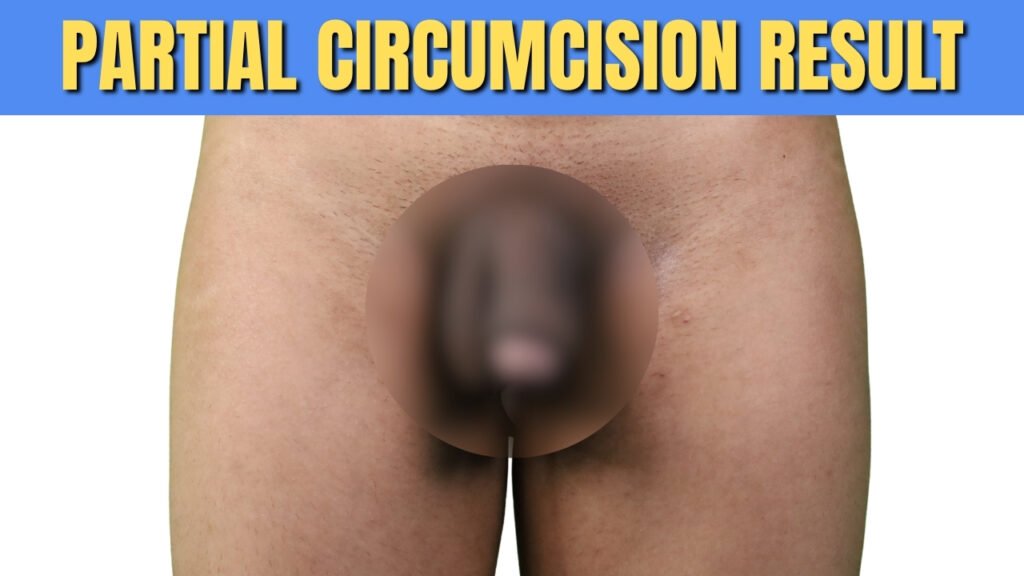
For many adult patients who say, “I have phimosis but I don’t want full circumcision,” the best balanced solution may be partial circumcision.
Partial circumcision removes only the tight, diseased, scarred, or narrow ring of foreskin while preserving more foreskin than a full circumcision. The aim is to make the foreskin retractable, improve hygiene, reduce pain, and preserve a more natural appearance.
Why Partial Circumcision can be a Good Option
Partial circumcision may be suitable when:
- The patient wants foreskin preservation
- Stretching has failed
- Steroid cream gives only temporary relief
- The tight ring is localized
- There is recurrent cracking or pain
- Full circumcision is not preferred
- The patient wants a more reliable long-term solution
- Cosmetic preservation is important
Benefits of Partial Circumcision
- Preserves more foreskin than full circumcision
- Removes the tight problematic ring
- May improve hygiene
- May reduce pain during sex
- May reduce recurrent tearing
- Faster and more definitive than long-term stretching
- More natural appearance compared with full circumcision
- Can be customized according to patient preference
Limitations of Partial Circumcision
Partial circumcision is not ideal for everyone. It may not be best if there is extensive BXO, severe scarring, recurrent infection involving most of the foreskin, or if the remaining foreskin may become tight again. In such cases, full circumcision may be more definitive.
This is why patient selection is important. A urologist can examine whether partial circumcision is suitable or whether full circumcision is medically safer.
Partial ZSR Circumcision vs Full ZSR Circumcision
| Feature | Partial Circumcision | Full Circumcision |
|---|---|---|
| Foreskin preservation | More preservation | Foreskin removed |
| Best for | Localized tight ring, foreskin preference | Severe scarring, BXO, recurrent infections |
| Cosmetic result | More natural appearance | Fully exposed glans |
| Recurrence risk | Possible in selected cases | Lowest recurrence risk |
| Hygiene improvement | Usually improves | Usually maximum improvement |
| Patient preference | Good for men avoiding full circumcision | Good for definitive treatment |
Full circumcision remains the most definitive treatment, especially for scarred phimosis, recurrent infection, or BXO. But for patients who strongly prefer foreskin preservation, partial circumcision can be a practical and patient-centered option.
BUY THIS PRODUCT
FAQs on ZSR Circumcision
You should see a urologist to identify the grade and cause of phimosis. Mild to moderate cases may improve with stretching, steroid cream, PhymoCure-type stretching devices, NovoGlan balloon dilation, hygiene correction, and infection treatment. Severe scarred phimosis may need surgery.
Yes, some cases can be treated without circumcision using topical steroid creams, gentle stretching, and dilation devices. The success depends on severity, scarring, infection history, and patient consistency. Guidelines support topical corticosteroids as first-line treatment for symptomatic phimosis in suitable cases.
Stretching can work in mild to moderate phimosis if done gently and consistently. It is often more effective when combined with prescribed steroid cream. Aggressive stretching can cause tears and make scarring worse.
Doctors commonly prescribe topical steroids such as betamethasone or clobetasol depending on the case. Medscape notes that corticosteroid creams are often used once or twice daily for four to eight weeks and may be more successful when combined with stretching.
Steroid cream can be safe when used for a limited time under medical supervision. Overuse can cause skin thinning, irritation, fungal infection, and recurrence after stopping. Do not self-medicate.
PhymoCare is generally understood as a phimosis stretching care approach or device category aimed at gradually stretching the tight foreskin. It may help selected patients with mild to moderate phimosis, but it should be used gently and ideally after urologist evaluation.
NovoGlan is a balloon dilation device for adult phimosis. It applies controlled stretching to the foreskin. An open-label clinical trial reported improved foreskin retraction after treatment, but larger comparative studies are still needed.
NovoGlan may help selected adults avoid surgery, especially mild to moderate cases. But it may not be suitable for severe scarring, BXO, recurrent infection, or failed conservative treatment. Surgery is more definitive.
Partial circumcision removes only the tight or diseased part of the foreskin while preserving more foreskin than full circumcision. It can be a good option for men who want a reliable solution but do not want complete foreskin removal.
Partial circumcision may be better for patients who want foreskin preservation and have localized tightness. Full circumcision may be better for severe scarring, BXO, recurrent infection, or high recurrence risk.
Yes, phimosis can recur if stretching is stopped too early, the skin is scarred, infections continue, or the underlying cause is not treated. Steroid creams may also give temporary relief in some scarred cases.
Circumcision may be necessary when phimosis is severe, scarred, recurrent, caused by BXO, associated with repeated infections, or when non-surgical treatment fails. BAUS states that circumcision is the mainstay treatment when the foreskin is scarred by BXO.
Yes. Phimosis can cause pain during sex, tearing, bleeding, condom difficulty, reduced confidence, and fear of intercourse. Treatment can improve comfort and hygiene.
Yes. Paraphimosis happens when the foreskin is pulled back and gets stuck behind the glans. It can reduce blood flow and is a medical emergency. Seek urgent care.
The best treatment depends on the severity. Mild to moderate cases may respond to stretching, steroid cream, or devices like NovoGlan. If conservative treatment fails, partial circumcision can be the best balanced foreskin-preserving surgical option. Full circumcision is the most definitive option for severe or scarred cases.
If you have phimosis and do not want surgery, you still have options. Many mild to moderate cases can be managed with foreskin preservation strategies, including gentle stretching, steroid creams, hygiene correction, infection control, PhymoCare-type stretching approaches, and NovoGlan balloon dilation.
However, non-surgical treatment is not suitable for every patient. If the foreskin is scarred, repeatedly infected, painful, or does not respond to conservative treatment, surgery may become the safer and more reliable choice.
For patients who want to avoid full circumcision but need a dependable solution, partial ZSR circumcision is often the best balanced option. It treats the tight ring while preserving more of the foreskin, making it a practical middle path between conservative treatment and full circumcision.
